Ophthalmic Plastic and Aesthetic Surgery
Blepharoplasty
- Blepharoplasty of the upper eyelids — a surgical treatment of drooping upper eyelids, consisting in removing excess loose skin. Drooping eyelids cause an older and more tired look and often reduce the field of vision. We perform treatments for both medical and aesthetic indications.
- Treatment of drooping eyebrows — a balanced eyebrow lift for aesthetic purposes.
- Lower eyelid blepharoplasty — removal of the so-called "bags" under the eyes, which often occur due to structural reasons (muscle weakness and loss of skin elasticity) or a hereditary tendency.
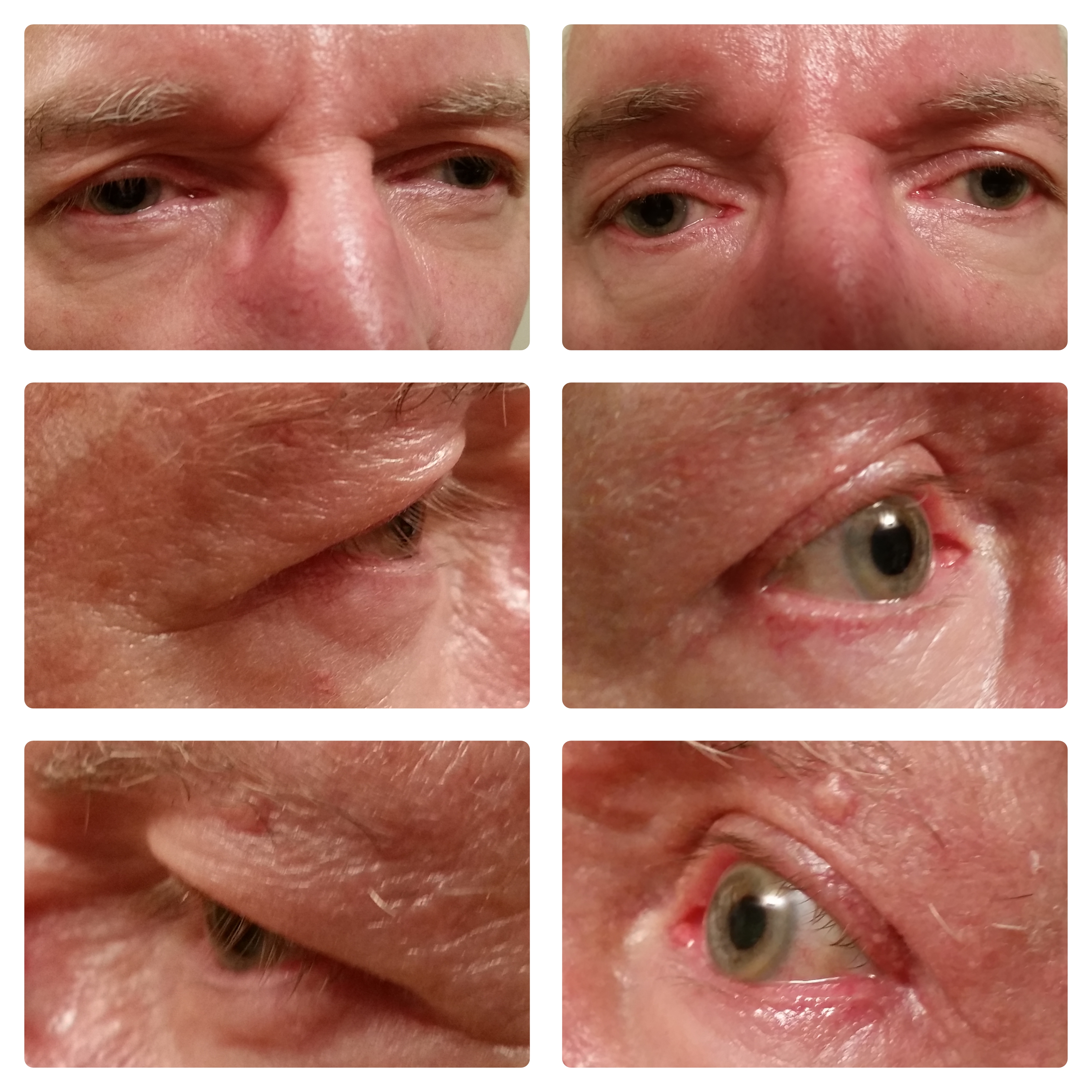
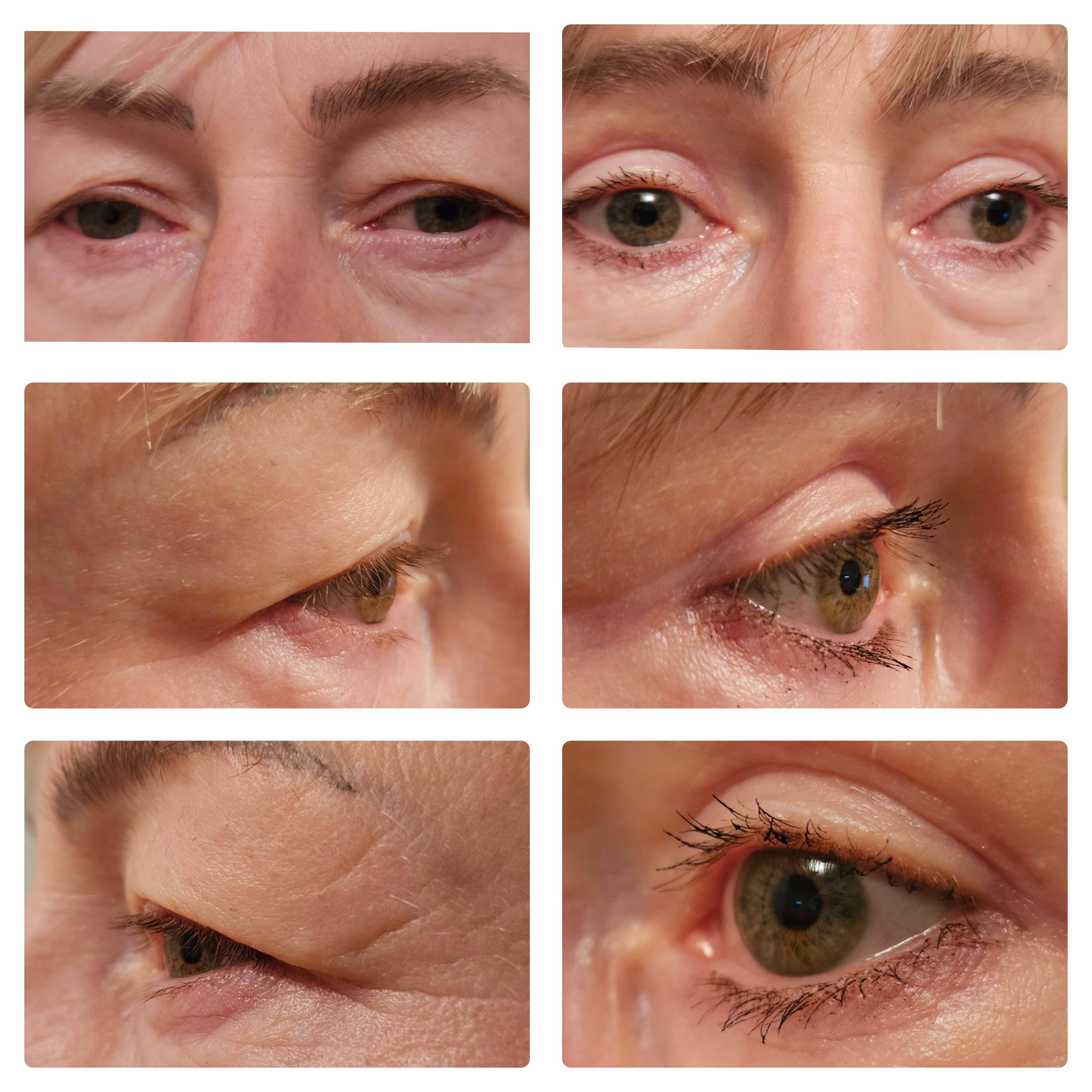
Ptosis Correction
Ptosis is a drooping upper eyelid that can reduce vision and is most often treated surgically.
It can affect one eye or both eyes and may be congenital or acquired.
It can cause:
- reduced visual field,
- a feeling of a heavy eyelid,
- eyebrow lifting or backward head posture to compensate,
- eye fatigue.
Treatment options:
- observation, if the ptosis is mild and not bothersome,
- treatment of the underlying cause, when present,
- conservative management in selected mild cases,
- surgery, which is the main treatment when ptosis affects vision or function.
Typical operations involve shortening or tightening the levator muscle or tendon, or using the Müller muscle in selected mild-to-moderate cases.
Ectropion, Entropion & Eyelashes
Ectropion
Ectropion is an outward turning of the eyelid margin, usually the lower lid. Because the lid no longer lies against the eye properly, it can cause tearing, irritation, dryness, redness, and inflammation. Common causes include age-related lid laxity, facial nerve palsy, scarring after trauma or surgery, and other eyelid disorders.
Treatment of ectropion
- Conservative: lubricating drops, ointments, and sometimes anti-inflammatory or antibiotic eye drops.
- Surgical: eyelid tightening, lateral canthal repair, skin removal, or reconstructive procedures.
Entropion
Entropion is an inward turning of the eyelid margin, usually the lower eyelid, so that the lashes rub against the eye. This can cause tearing, foreign-body sensation, pain, redness, light sensitivity, and corneal damage.
Treatment of entropion
- Surgical: eyelid tightening and suspension, horizontal shortening of the lid, repositioning of the structures causing inward turning, or everting sutures such as Quickert sutures.
Lubricating drops or ointments may ease symptoms, but usually do not provide a permanent correction.
- Treatment of abnormal eyelash growth.
Lacrimal Ducts
What are the tear ducts?
The tear drainage system carries tears from the eye surface into the nose. When a punctum or canaliculus becomes narrowed or blocked, tears cannot drain properly and tearing may occur; recurrent lacrimal sac infection can also develop.
What is 3-snip punctoplasty?
3-snip punctoplasty is a surgical procedure used when the punctum is too narrow or closed. The surgeon enlarges the tear drainage opening so tears can pass more easily into the rest of the drainage system.
In simple terms: if the "entry point" is too tight, the procedure opens it up again.
What is canalicular intubation with a MonoK stent?
Intubation means placing a thin silicone stent into the tear drainage pathway to keep it open after widening or reconstruction. The stent works like a gentle "splint" that helps prevent re-scarring and maintains tear flow. It is often removed after a few months, once patency is stable.
When is this treatment considered?
- Chronic tearing caused by punctal or canalicular narrowing.
- When conservative treatment is not enough.
- To maintain patency after dilation or reconstruction.
Treatment of Dry Eye Syndrome (DES) with punctal plugs
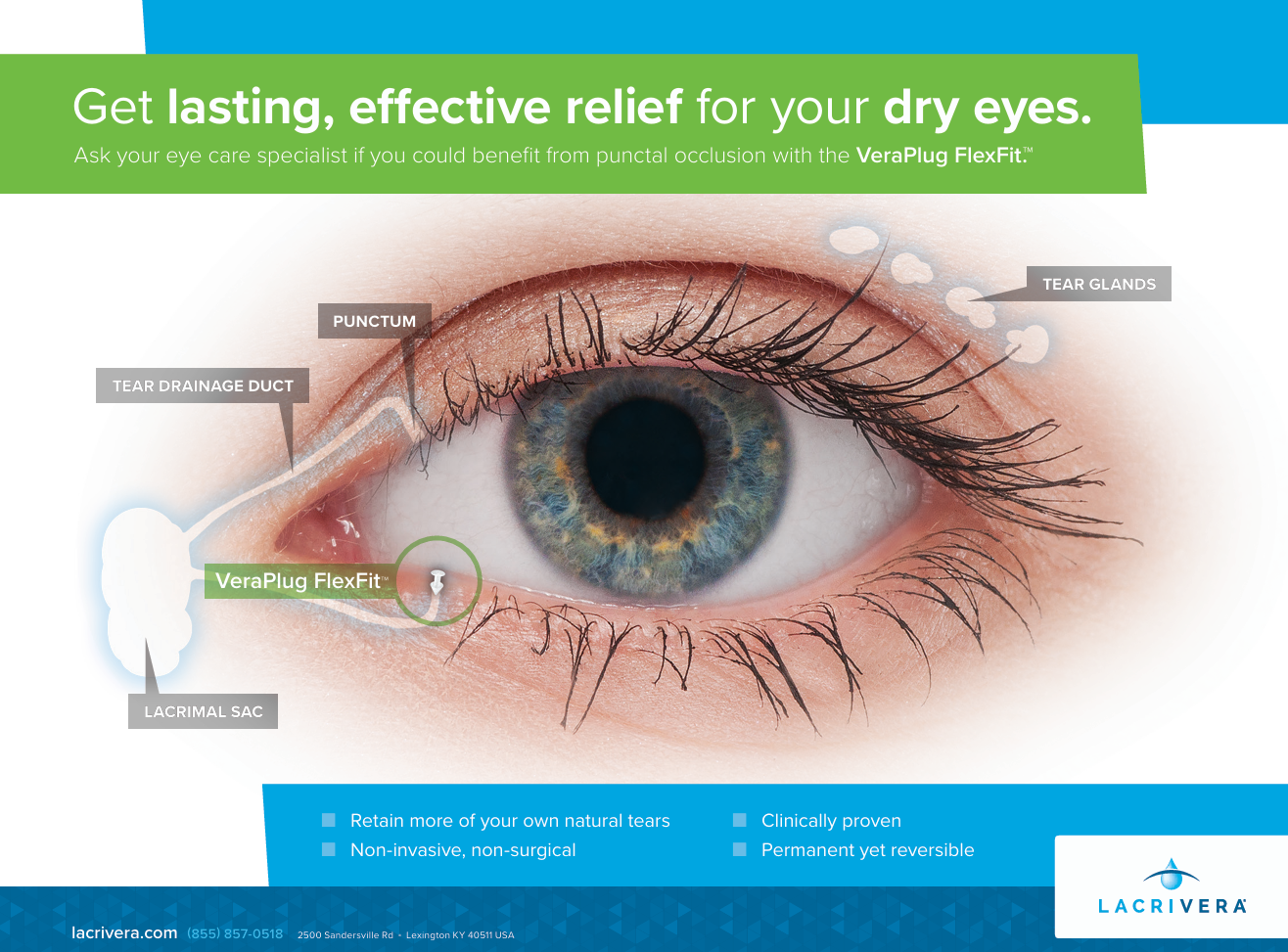
Treatment of dry eye with punctal plugs
Punctal plugs are tiny, biocompatible devices placed into the tear drainage openings. They work by reducing tear outflow, so tears stay longer on the eye surface and provide better lubrication.
When is this treatment considered?
It is most often used in moderate to severe dry eye disease, especially when artificial tears are not enough. Plugs may be temporary or permanent.
How is the procedure done?
Placement is quick, usually painless, and performed in the clinic. Many patients notice improved eye comfort soon after the procedure.
Possible benefits
- less burning and foreign-body sensation,
- reduced redness,
- less dependence on lubricating drops,
- improved visual comfort and daily function.
Possible side effects
- tearing,
- foreign-body sensation,
- irritation,
- spontaneous plug loss.
Important: punctal plugs are not suitable for everyone. They are usually avoided in active ocular surface inflammation, eyelid inflammation, or active lacrimal infection.

CAUTION
The procedures are performed on an outpatient basis, under local anesthesia. The patient cannot drive right after the procedure and it is also recommended to come accompanied.
Take care of your eyes — make an appointment today.